_edited.png)
The Most Overlooked Defect We Find During Home Surveys

Why Rainwater Goods Matter More Than Most Homeowners Realise
At Atom Surveyors, one of the most common defects we encounter isn't subsidence, structural movement or roof failure.
It's faulty rainwater goods.
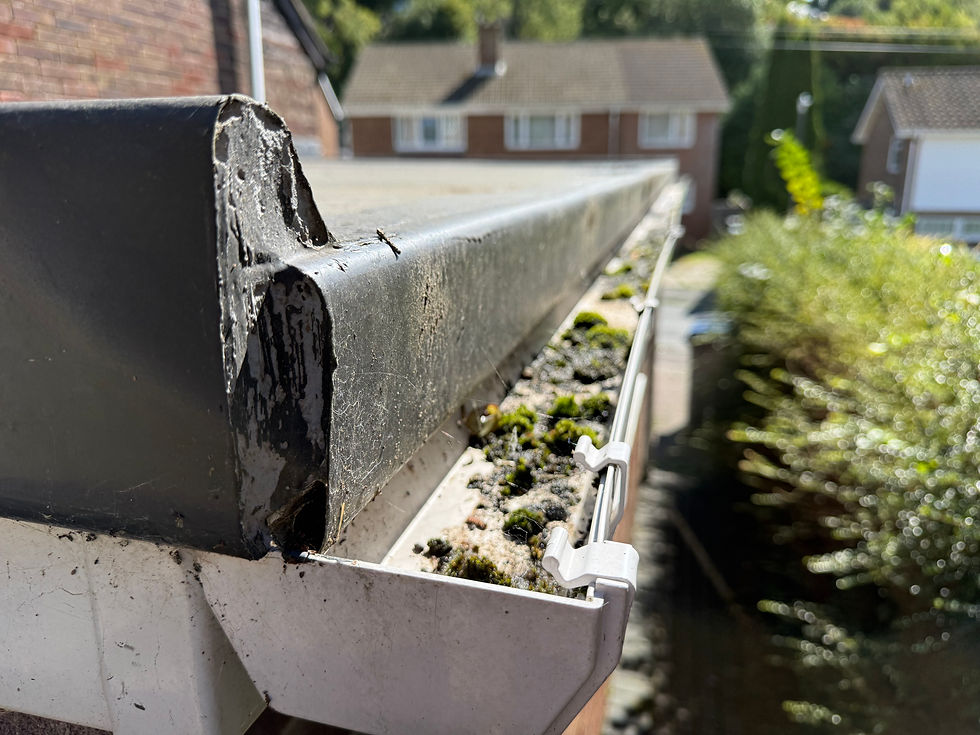
That includes gutters, downpipes, hoppers and roof valleys; components many homeowners rarely think about until a problem develops.
The surprising thing is that relatively minor defects to a rainwater system can sometimes lead to significant damage elsewhere in a property.
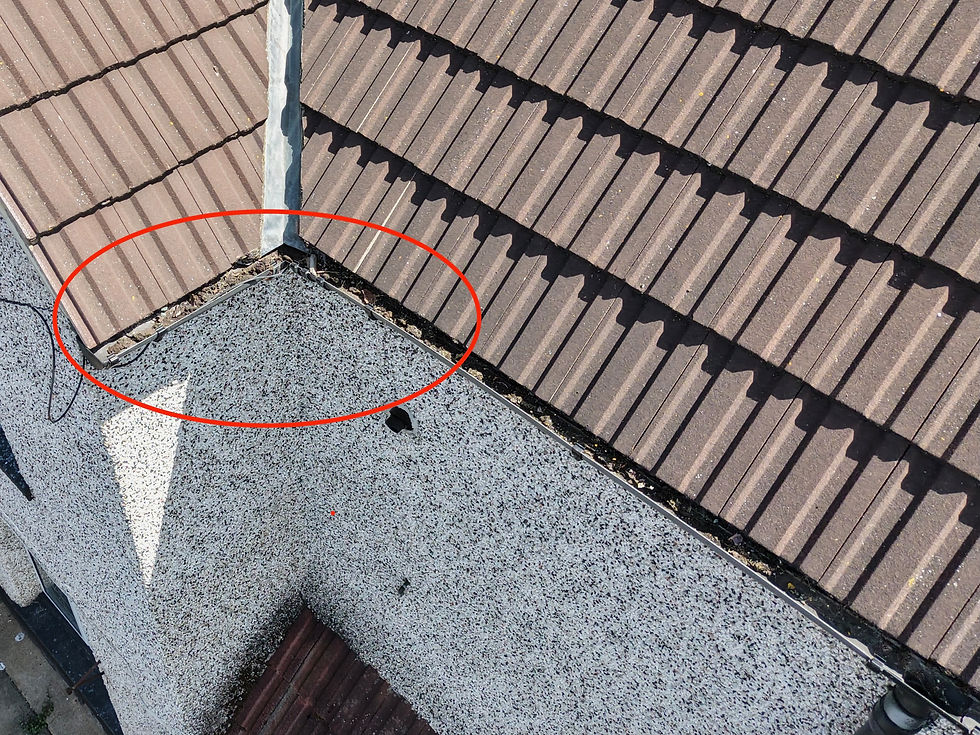
The examples featured below are taken from actual survey inspections and demonstrate how seemingly minor defects to gutters, downpipes and roof drainage systems can contribute to much larger property issues over time.
What Are Rainwater Goods?
Rainwater goods are designed to collect rainwater from the roof and safely carry it away from the building.
A typical system will comprise:
Gutters
Downpipes
Valleys and outlets
Hoppers
Underground drainage connections
When functioning correctly, these components keep walls, foundations and roof structures dry.
When they aren't, problems can quickly develop.
Common Defects We Find
During our surveys, we regularly identify:
✅ Blocked gutters
✅ Vegetation growth
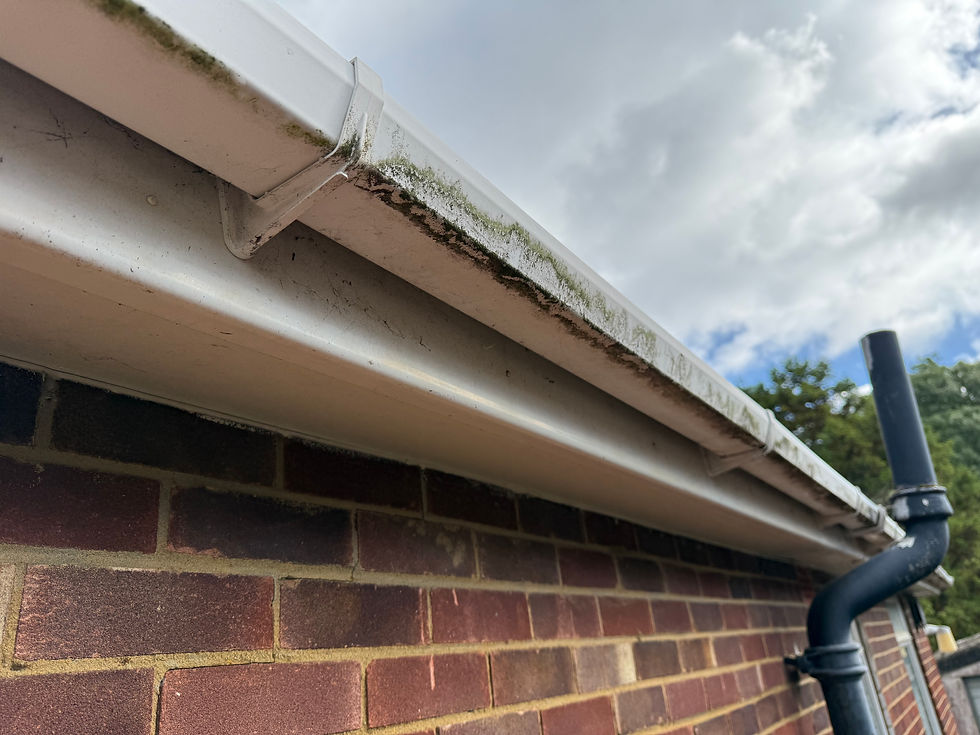
✅ Leaking joints
✅ Displaced sections
✅ Corroded cast iron gutters
✅ Loose brackets and fixings
✅ Downpipes discharging directly to the ground
✅ Poorly maintained valley gutters
Many of these issues are relatively inexpensive to rectify if identified early.
Why Does It Matter?
Water is one of the most destructive forces affecting buildings.
A leaking gutter may not look particularly concerning from ground level, but repeated water discharge onto external walls can contribute to:
Penetrating dampness
Internal damp patches
Damage to decorative finishes
Timber decay
Erosion of mortar joints
Accelerated weathering of masonry
In older properties, prolonged water saturation can even contribute to movement and deterioration of structural elements over time.
The Downpipe Problem
One issue we see particularly often is rainwater discharging directly onto the ground beside a building.
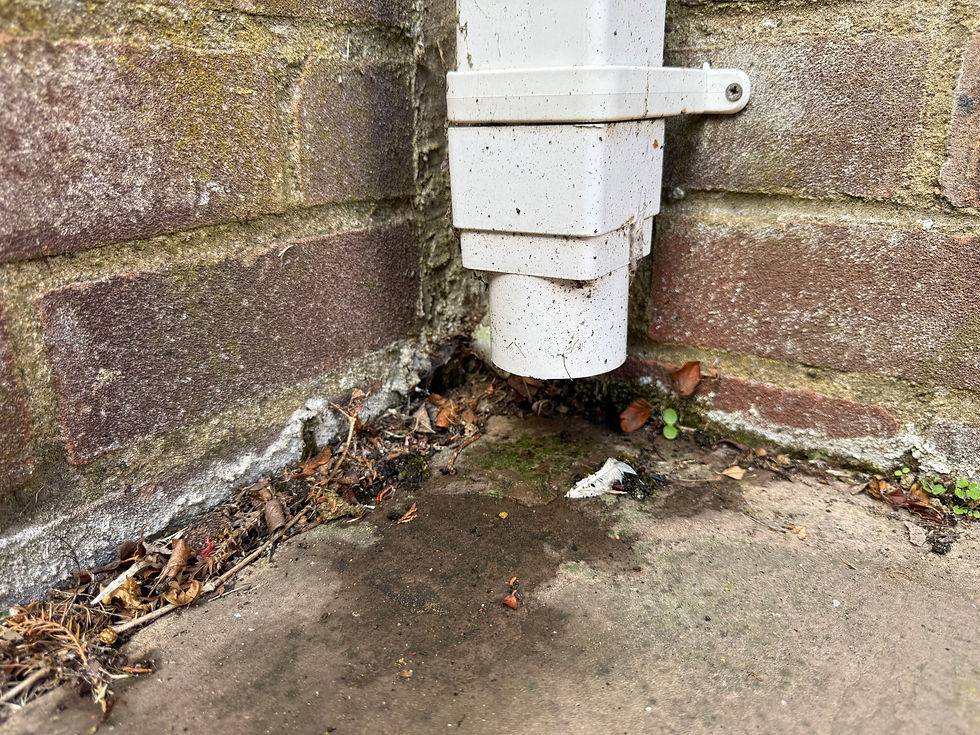
Whilst this may seem harmless, concentrated water discharge can saturate surrounding ground conditions and increase moisture levels around external walls.
Ideally, rainwater should discharge into a suitable drainage system designed to carry water away from the property.
Roof Valleys: The Hidden Risk
Valleys are another common source of defects.
These channels collect large volumes of rainwater where two roof slopes meet.
Because they are difficult to see from ground level, they often become blocked with leaves, moss and debris.
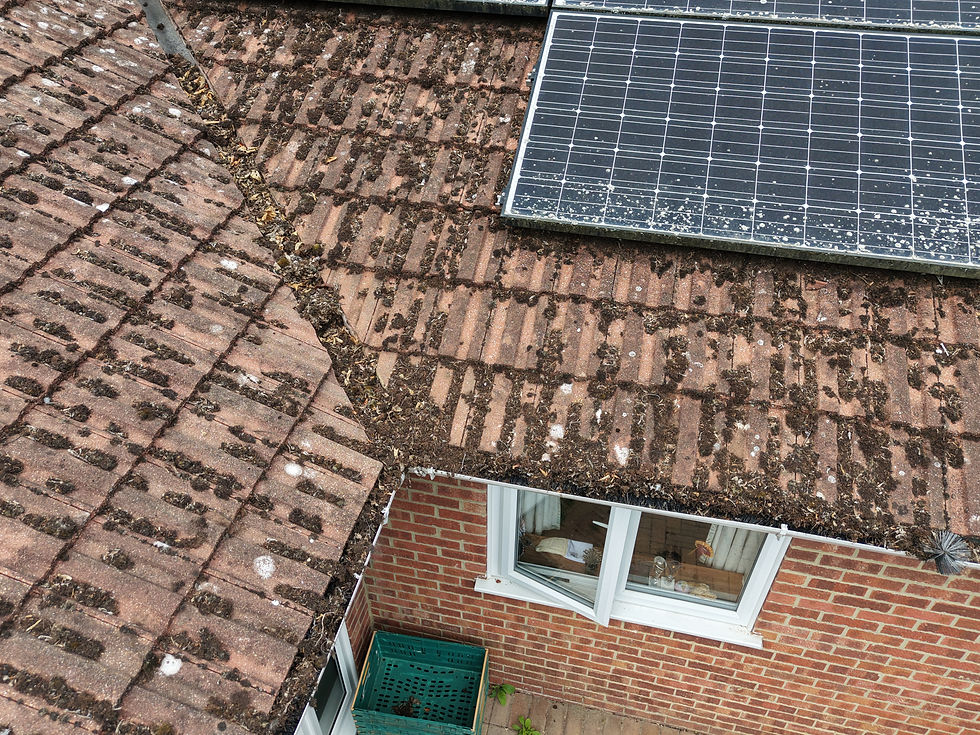
When this happens, water can back up beneath roof coverings and create moisture problems that may not become apparent internally for some time.
Why We Use Drones
Many rainwater defects occur at roof level and cannot be adequately inspected from the ground.
As part of our survey inspections, we utilise aerial drone technology where appropriate to inspect:
Gutters
Valleys
Chimney flashings
Roof coverings
High-level rainwater outlets
This often reveals defects that would otherwise remain hidden.
The Takeaway
Rainwater goods are one of the most overlooked elements of property maintenance.
Most defects begin as minor maintenance issues, but if ignored they can contribute to much larger and more expensive problems over time.
A building can only perform properly if water is managed effectively.
It's one of the simplest principles of building pathology and one of the most important.
Need Advice?
If you're buying a property anywhere in East Kent and would like a professional assessment of its condition, Atom Surveyors can help.
Helping people understand property with confidence.




Comments